How a concrete batching plant ships to site
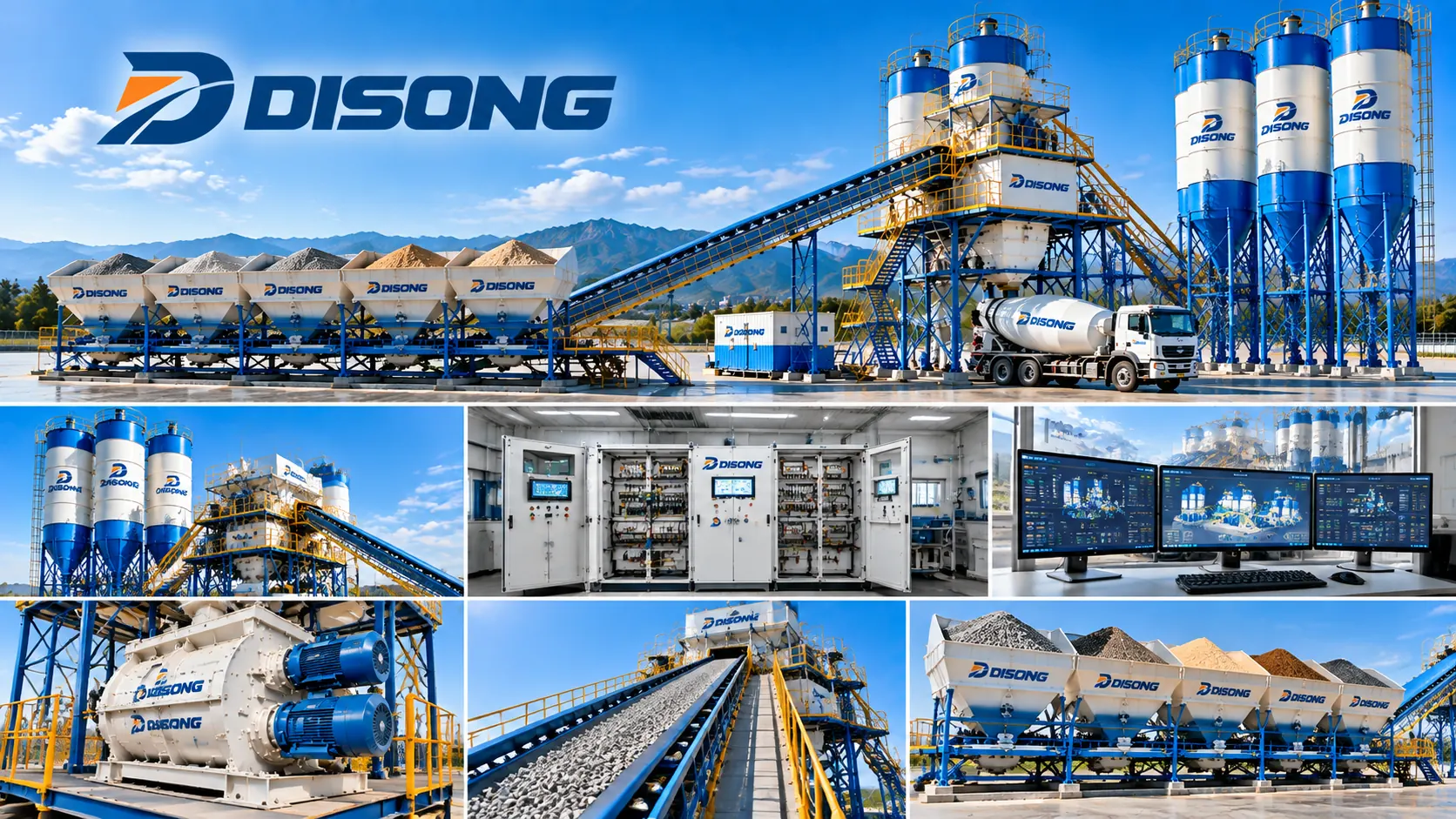
A batching plant is not shipped as one machine. It travels as a set of modules packed for standard containers, and the way it is split is decided by how it will be assembled on your site. This page explains what that means for your project — the packing, the documents and what has to be ready at the destination.
The shipping split follows the assembly sequence
Plants are normally broken down for container shipment, with a shipping split that follows the site assembly sequence. In practice that means the modules are grouped by the order they are needed on site, not by weight or convenience at the factory. The same modules can therefore be erected, dismantled and erected again as the work moves — which is what makes a plant re-usable across a series of projects rather than welded to one location.
What is broken down
- Cement silos: separated from the main structure and split for standard container loading.
- Steel structure: divided into transportable sections per the loading plan.
- Mixer, batcher and weighing assemblies: packed as separate items so they can be lifted into place directly.
- Electrical panels, control system and small parts: cased and crated, listed item by item on the packing list.
Documents that come with the order
The packing list and the loading plan come with the quotation, so the freight and the unloading arrangements can be quoted against the real weights and dimensions rather than an estimate. Shipping documents are prepared for the destination port as part of the order; import duties, standards approvals and customs formalities are buyer-side matters, and the equipment documents you need to complete them are provided.
What the destination needs
Standard container handling plus lifting equipment for the heavy sections, and inland transport sized for the largest packed item. Because the loading plan lists weights and dimensions, unloading and haulage can be arranged before the vessel arrives instead of after. On site, the plant is assembled in the order of the shipping split, with the electrical package built for the site supply (380–415 V / 50 Hz or 400–440 V / 60 Hz).
Frequently asked questions
How many containers does a batching plant need?
The number follows the plant size and the packing plan, so it is stated on the quotation rather than quoted as a general figure. Small plants travel in a few containers; large plants are split across more, always following the site assembly sequence.
What is broken down for shipment?
Cement silos are separated from the main structure, the steel structure is split into transportable sections, the mixer, batcher and weighing assemblies are packed as separate items, and electrical panels and small parts are cased and crated.
What is needed at the destination port?
Standard container handling plus lifting equipment for the heavy sections, and inland transport sized for the largest packed item. The loading plan lists the weights and dimensions so you can arrange unloading and haulage before the vessel arrives.
Are documents provided for import?
The shipping documents are prepared for the destination port as part of the order. Import duties, standards approvals and customs formalities are buyer-side matters; we provide the packing list, loading plan and the equipment documents you need to complete them.
Contact
DISONG Equipment LLC — Wyoming Limited Liability Company. Mailing address: 525 Randall Ave Ste 100, PMB 1419, Cheyenne, WY 82001, USA. Telephone/WhatsApp: +1 (213) 879-8221. Telegram: @disong_equipment_bot. Email: sales@disongequipment.com.
See also: price list · HZS60 specifications · retrofit and spare parts · full product range · request a quotation.
Terms of sale
Prices are FOB port of loading. Ocean freight, destination port charges, unloading and site-specific electrical work are quoted separately per shipment. Equipment is built to order, so returns are not accepted; delivery includes warranty service and spare-parts support from DISONG Equipment LLC.