How we deliver, project by project
The profiles below describe how equipment is configured, packed, shipped and commissioned for different project conditions. They are delivery programmes rather than client references: customer names and commercial details are not published.
Containerised plant delivery
Plants broken down for standard container loading, with a shipping split that matches the site assembly sequence and unloading equipment available at destination.
- Knock-down packing and itemised packing list per container
- Load plan matched to crane or forklift capacity on site
- Import documentation prepared with the shipment
Remote and island project commissioning
Delivery to sites with limited access and limited local engineering resource: pre-assembled and factory-tested modules where possible, with commissioning supervision and remote follow-up.
- Factory testing before shipment to reduce site work
- Commissioning supervision and operator training
- Remote technical support after handover
Hot, humid and coastal-climate configurations
Equipment configured for high ambient temperature, humidity and coastal air — insulation class, panel cooling, corrosion protection and maintenance intervals adapted to the environment.
- Electrical equipment rated for high ambient temperature
- Panel cooling, sealing and corrosion protection
- Maintenance and spares plan for the conditions
Site power supply adaptation
Plant and control systems configured to the destination supply — voltage, frequency and neutral arrangement — including generator operation where the site is off-grid.
- Equipment matched to local voltage and frequency
- Generator-operation configurations for off-grid sites
- Electrical documentation for local installation
Control system replacement in operating plants
Obsolete or unreliable control and weighing systems replaced in operating plants, with staged changeover to keep production interruptions to the agreed window.
- Survey of existing plant and wiring
- Panel and weighing package prefabricated and tested
- Changeover plan agreed with the production team
Spare parts and service continuity
Wear parts, electrical spares and critical spares identified from the plant configuration, with a recommended stocking list so production is not lost to a single component.
- Recommended critical spares list per plant
- Wear-part identification by model and position
- Replenishment support through the operating life
Plants for built-up and regulated sites
A plant inside a built-up area keeps concrete supply off public roads — but siting it near housing, schools or public roads also brings local conditions on dust, noise and operating hours. The package is configured around those conditions, and the layout is planned for the access and working space the site actually has.
- Enclosure, silo vent filters and dust-collection provisions where the site conditions require them
- Sealed transfer points and water spray at the batching and discharge points
- Low-noise drive and machine specifications where operating hours are restricted
- Equipment documentation prepared to support the local approval process
Relocatable plants for dispersed and remote sites
Road casting, district works and island or inland sites rarely stay in one place, and hauling ready-mix from a distant plant is often the slowest and most expensive part of the job. Equipment for these programmes is supplied as containerised, factory-tested modules: sized to the site, packed for standard containers and documented so the same modules can be erected, dismantled and erected again as the work moves.
- Knock-down, containerised packing so the plant can move to the next pour
- Pre-assembled, factory-tested modules to shorten erection at each new site
- Aggregate, cement and water storage sized to the site rather than a fixed plot
- Commissioning supervision and operator training repeated at each relocation
Plant supply for linear infrastructure programmes
Road, highway and transit packages take concrete along a moving alignment and at the rate the paving and structures front sets, so the plant has to hold output across long shifts instead of delivering in short bursts. For these programmes the plant, the aggregate and cement feed and the delivery cycle are planned as one system: capacity and storage chosen against the demand curve, batching and weighing configured for sustained production, and the layout set for the access and haul distances the alignment actually has.
- Output, silo and aggregate storage sized to the concrete demand of the pavement and structures programme
- Batching and weighing packages configured and calibrated for sustained multi-shift production
- Aggregate and cement feed planned together with the delivery cycle and the haul distance
- Production records and control functions set up for the quality documentation the works require
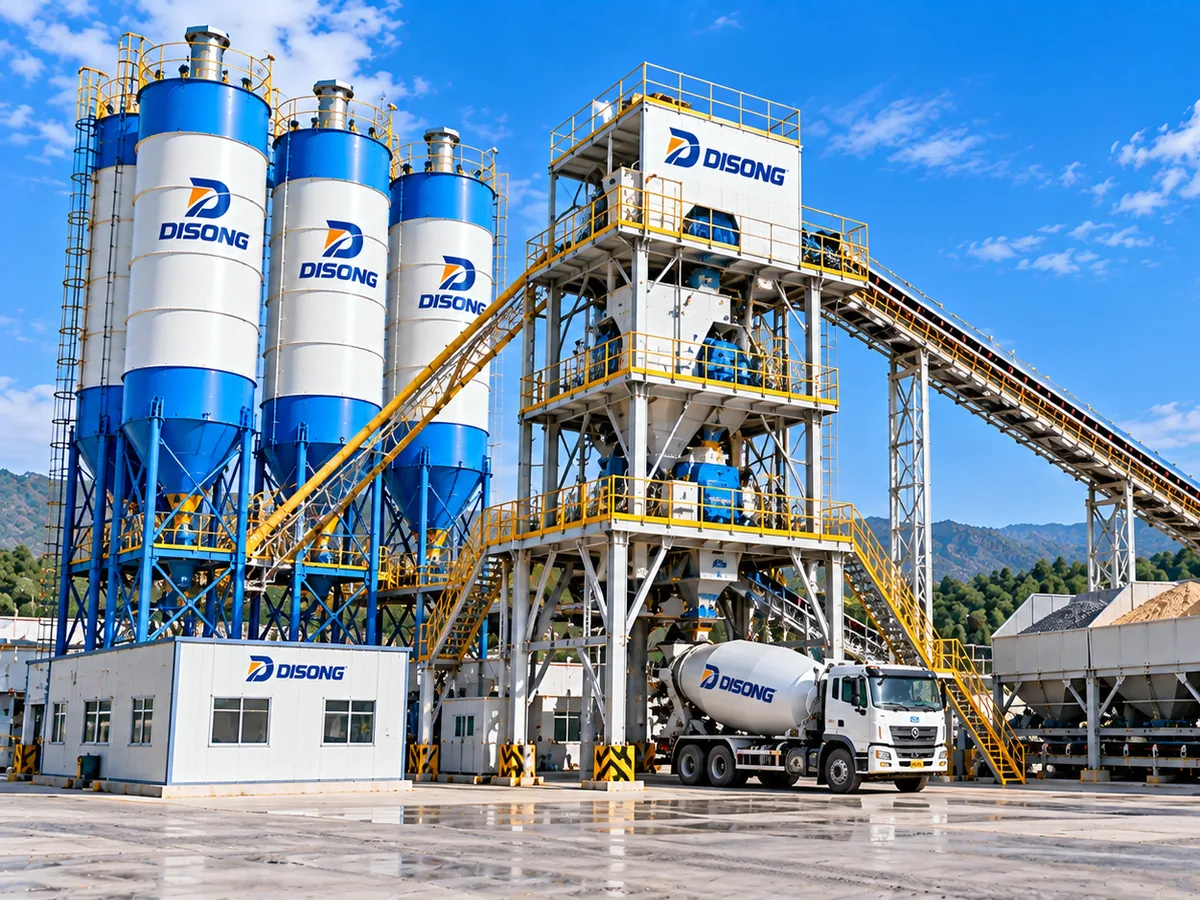
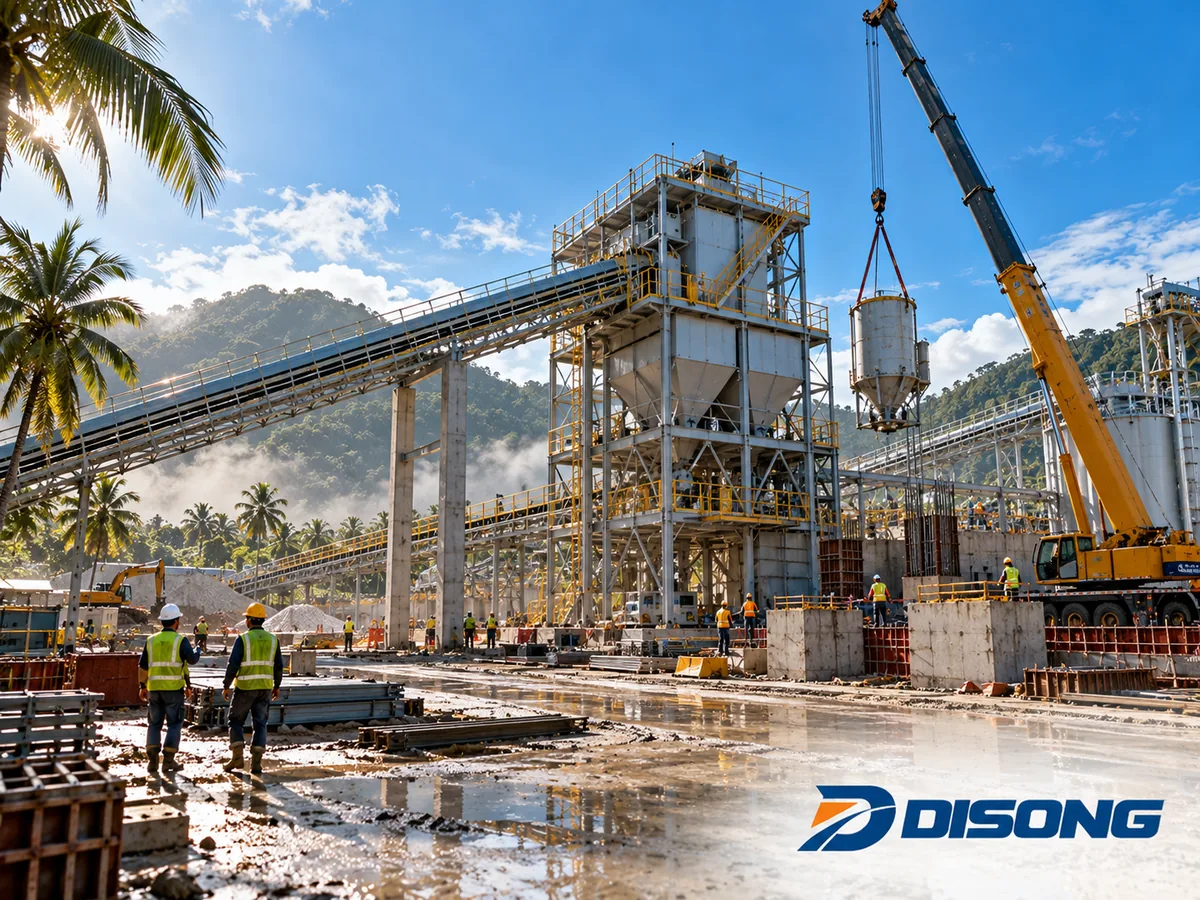
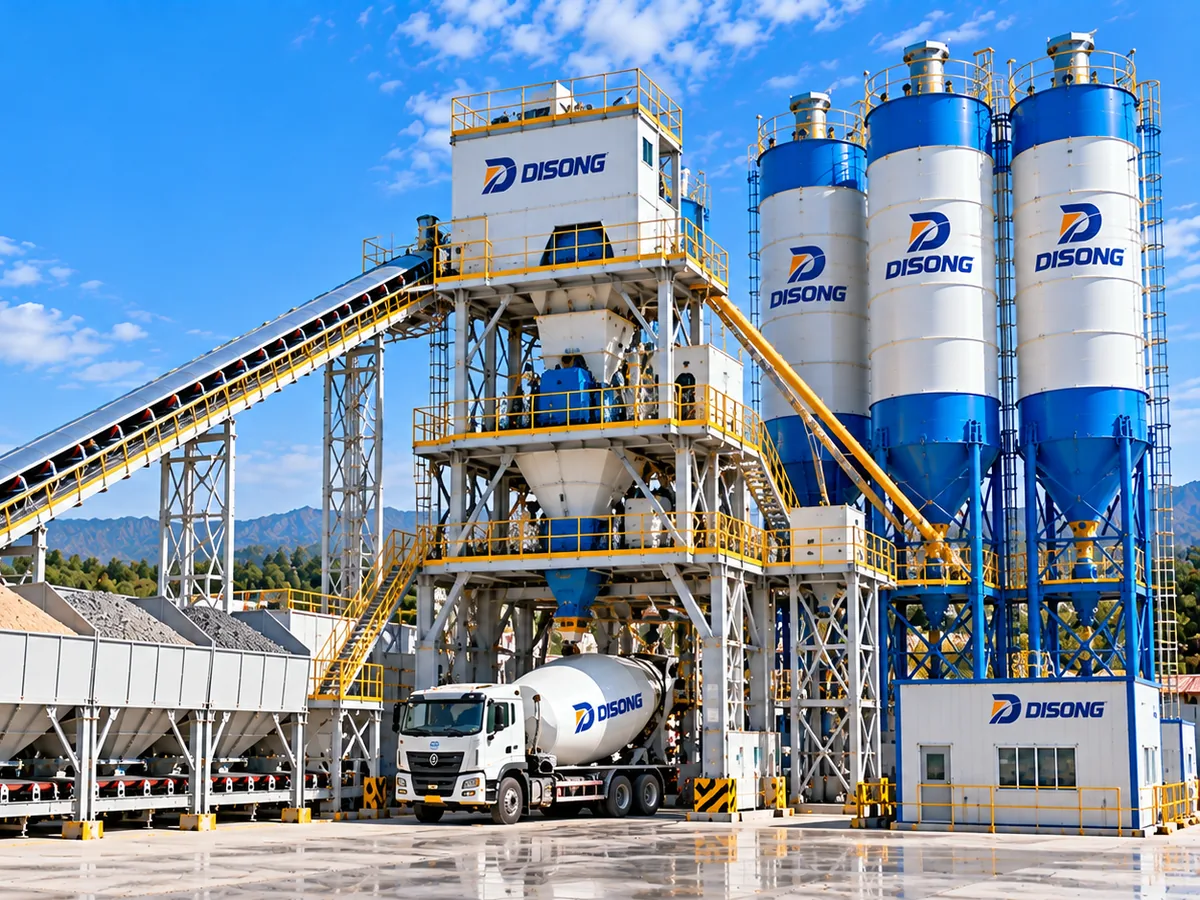
Representative application environments and engineering scenarios. These images are illustrative visuals, not photographs of completed customer installations.
Global supply and engineering — a 54-second film
Supply coordination, technical preparation, component sourcing and inspection, export packing, warehouse handling, container loading and lashing, shipping documentation, international logistics and remote technical support in one continuous pass. The film carries narration and music — press play to hear it.
Illustrative industrial and engineering visualization — generic supply, packing and logistics operations, not a record of an actual DISONG shipment, warehouse, factory or customer project.