Concrete batching plant for railway and viaduct works
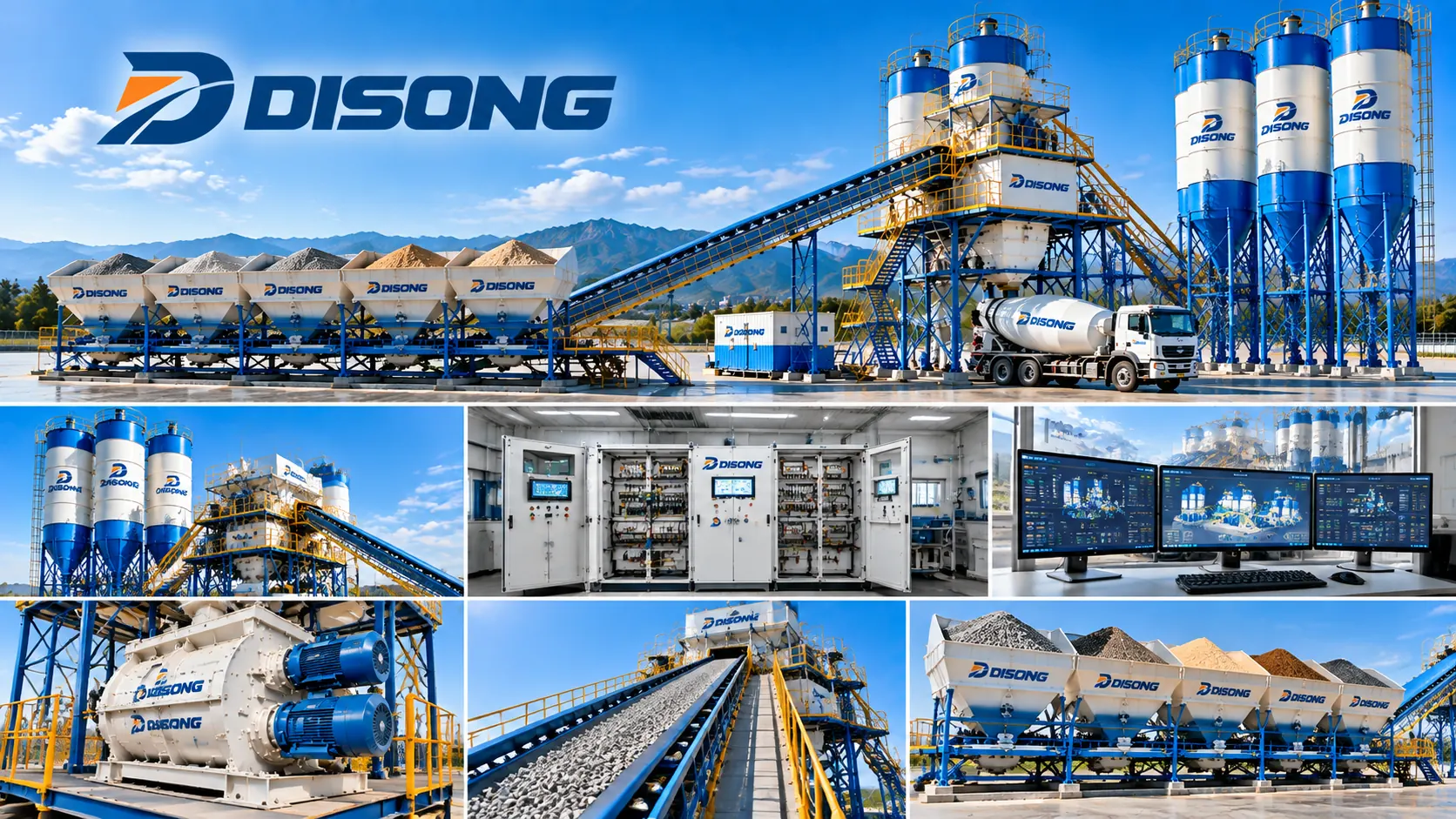
Railway work buys concrete in a shape no other project does: long, continuous, and temperature-critical. A viaduct pier, a segment, a ballastless slab or a station box each want a supply that does not stop in the middle of a pour — and the mix that arrives has to be inside its temperature window when it lands, not when it was batched.
Why rail pours are harder than they look
Three things separate a rail package from a building:
- The pour does not pause. A pier shaft or a deck segment is placed in one continuous operation. Stopping creates a cold joint the inspector will find.
- Mass concrete heats up. Thick sections crack from their own hydration heat, so the mix often arrives chilled, with ice or chilled water in the batch.
- The alignment is linear. The works move along a corridor for kilometres, and the plant either sits at a central yard feeding trucks down the alignment, or moves in stages with the works.
Capacity: peak, then one step up
A single pier or segment yard is usually fed by an HZS90 or HZS120. Where the same station feeds several casting beds, or the package includes the deck and the station structures, the shortlist moves to the HZS180. The rule that holds across rail work is to size on the peak hour of the largest pour and then confirm the plant can hold that rate for the whole pour, not for twenty minutes.
Segment yards add a second consumer to the same station: the precast beds run on their own cycle while the cast-in-place work continues. Two discharge points on one plant is a layout decision, not a capacity decision, and it is much cheaper to draw it before the plant is ordered.
Chilled water and ice
For mass sections the batching plant is only half the temperature story. Chilled water plants and flake-ice units are specified alongside the station, and the batch controller has to account for them in the water line. If the mix design specifies a maximum placing temperature, that constraint belongs in the enquiry — retrofitting a chiller onto a station ordered without one is the expensive version of the same decision.
Where the plant sits on a linear job
A central yard beside the alignment with a hard road to the casting beds is the simplest arrangement and the cheapest to run. A plant that leapfrogs along the corridor trades haul distance for relocation cost, and wins when the corridor is long enough that truck cycle time becomes the bottleneck. Both arrangements need the same three drawings: the pad layout, the truck route, and the discharge reach.
What to put in the enquiry
- The largest single pour in m³ and its planned duration
- Maximum placing temperature and whether ice or chilled water is specified
- Number of discharge points — casting beds, pier locations, or both
- Whether the plant is fixed for the package or moves between sections
- Cement and fly-ash delivery method, and silo tonnage
With those, the model and the plant layout can be fixed together. Model data and published FOB ranges are on the price page; regional context is on the Philippines, Indonesia and Malaysia pages.
Terms of sale
Prices are FOB port of loading. Ocean freight, destination port charges, unloading and site-specific electrical work are quoted separately per shipment. Equipment is built to order, so returns are not accepted; delivery includes warranty service and spare-parts support from DISONG Equipment LLC.