Concrete batching plants for the Philippines — construction, ready-mix and island projects
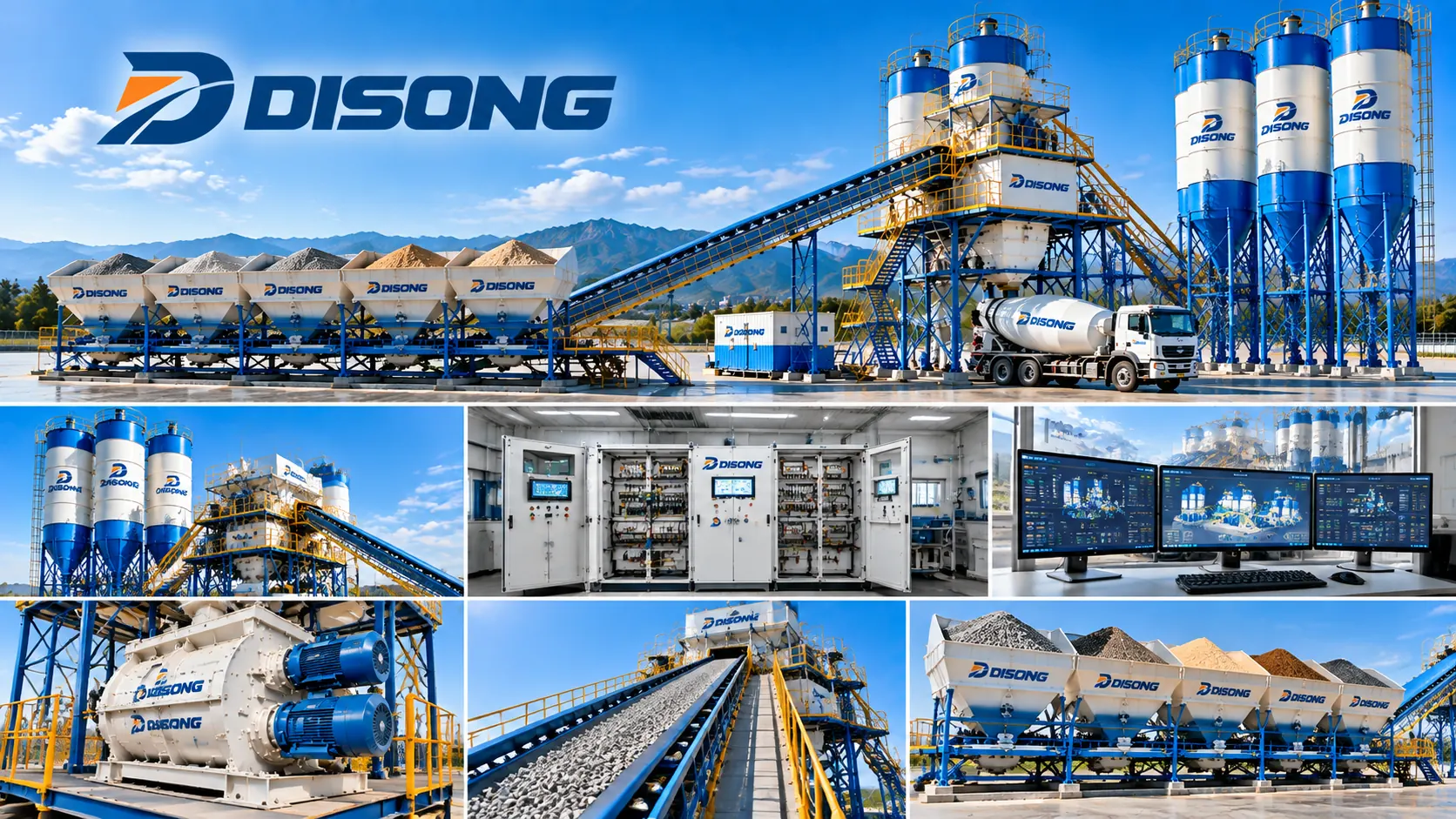
Philippine buyers review the plant, the electrical package and the shipping plan together, because grid frequency, tropical weather and inter-island transport all change the project scope.
The range we supply
Nine models from HZS25 (25 m³/h) to HZS240 (240 m³/h), with published FOB prices from US$62,000 to US$320,000 for the standard configuration — the full table is on the price page. Every plant ships containerised, broken down so the modules follow the site assembly sequence and can be moved on to the next project.
Power supply
The Philippines runs at 60 Hz and the voltage is site-specific, so motors, controls and protection are engineered to the signed supply data. The country operates three separate grids — Luzon, Visayas and Mindanao — and a plant built for one island's supply can need a different electrical package on another, which is worth settling before the order.
Climate and site conditions
Review heavy rainfall and typhoon exposure, drainage, lightning protection, corrosion control and covered aggregate storage.
Ports and inland transport
Manila — including the Manila International Container Terminal — is the main international gateway, with Batangas as its alternate port for the CALABARZON area, Subic as a freeport, Cebu as the largest domestic port for the Visayas and Mindanao and Davao for container and bulk cargo. Confirm the gateway, the island leg, the unloading crane and road access before freight is quoted.
Import documents and standards
Public-works bidders sometimes meet a batching-plant requirement in the bid documents: it is an accreditation matter rather than a condition of owning a plant, and contractors without one can comply through a leased or contracted supply. We provide the equipment specification, layout information and packing list that go into that accreditation file. Import approvals and customs formalities remain buyer-side.
Sizing a plant in a flat market — the 2026 cement picture
On 29 October 2026 the Cement Manufacturers Association of the Philippines put the year at roughly flat: volume from January to September ran 2 to 3 percent below the same months of 2025, and full-year demand is expected to land near the 34 million tonnes (about 85 million bags) consumed in 2025, against roughly 52 million tonnes of installed domestic cement capacity — some 18 million tonnes of headroom before imports are counted (Business Inquirer, BusinessMirror and BusinessWorld, all 29 October 2026). Two numbers explain the softness: infrastructure spending fell 16.9 percent to P70.5 billion, and building permits dropped 31 percent in August to 10,968 approvals, as disbursements slowed after the flood-control investigations. The industry expects 2027 to improve, because a pre-election year pulls public works forward ahead of the 45-day spending ban that precedes a national vote. For the equipment decision this shifts the question from “how big” to “how much can you actually sell”: where cement capacity is already in surplus, a ready-mix producer or a contractor is usually better served by capacity that can be stood up on one package, moved to the next, and left idle without cost — a containerised HZS25–HZS75 close to the pour rather than a large central plant hauling over distance. The safeguard duty of P349 per tonne on certain cement imports, and imports down about 30 percent this year, bear on the cement price your customer pays, not on the machinery you import.
When a package is awarded in November, the plant is the long-lead item
On 19 October 2026 the Department of Public Works and Highways said the most critical contract package of the Bataan–Cavite Interlink Bridge — a 32.15 km crossing of the mouth of Manila Bay, a 3.91-billion-dollar programme split into six packages — will be awarded in November, once the Asian Development Bank gives its concurrence (BusinessWorld, 19 October 2026). It is one award inside a larger wave: as of 26 August 2026 only 32% of the 2026 national works programme had been awarded — P146.41 billion of P459.89 billion, with 76% of projects already advertised — after late Special Allotment Release Orders and stricter documentation (GMA News, 26 August 2026). What follows for equipment is a timing problem rather than a volume problem. A contractor that wins a package in November or December mobilises into the dry season, and the batching plant is the item that has to be standing before the first structural pour — so the order is placed against the award date, not against the first pour, and the shipping and site-assembly sequence is settled while the contract is still being signed. On a bridge package the plant is also sited for the casting yard rather than for haul distance, which is why the useful questions at that point are the peak daily volume at the casting yard, the volume at the land approach, whether those two fronts are served by one plant placed between them or by two smaller ones, and the pour window the site is allowed.
Retention basins as a code requirement — and the concrete work behind it
On 22 October 2026 the Department of Public Works and Highways said it will recommend that stormwater detention basins become a mandatory requirement for private real-estate developments nationwide under updated building and land development codes, after inspecting a 15,000 m³ rainwater park in San Fernando, Pampanga, and that it has worked with the Department of Human Settlements and Urban Development on the draft guidelines (Philstar, 22 October 2026). The works already moving run the same way: detention basins at Plaza Rajah Sulayman in Malate, three planned inside Luneta, and retarding basins submitted for the 2027 budget. What that means for concrete supply is a change of shape rather than of total volume — a retention structure is a box cast in place, base slab and walls, at many separate addresses, each with a short standing time and very little room for a stockyard, instead of one long pour at one site. For that pattern a plant that is dismantled into containers, stood up on a small pad and moved on when the structure is cast is usually the cheaper answer than a large central plant sending trucks over distance. The enquiry that follows from it is therefore about the largest single pour, the permitted working hours and the distance to the next site — not about the annual tonnage of a ready-mix yard.
Where these plants are used in the Philippines
Urban ready-mix supply, roads and bridges, housing, industrial construction and island development. The Build Better More programme — 194 flagship projects over 2022–2028 — keeps public demand on roads, bridges and flood control, with DPWH responsible for national works.
Frequently asked questions
Which capacity suits a Philippine project?
Urban ready-mix supply usually starts on HZS50–HZS75; a city operation or a contractor supplying several sites moves to HZS120; and a plant feeding a large public-works package to HZS180–HZS240. Where a project moves between islands, the smaller movable stations are usually chosen so the plant travels with the work.
Is 60 Hz a problem for a batching plant?
No — it is a specification, not a problem: motors, controls and protection are built for the supply you confirm. What matters is that the voltage and frequency on the site are signed off before the electrical package is ordered, because the three grids do not share the same conditions.
Do we have to own a batching plant to bid for public works?
That is the common reading, but the requirement in the bid documents is an accreditation matter rather than a condition of ownership, and contractors without a plant can comply through a leased or contracted supply. We prepare the equipment specification, layout information and packing list needed for that file.
Which port do you ship to?
Manila (with the Manila International Container Terminal as the usual container gateway) for Luzon, Batangas as its alternate, Subic for the freeport area, Cebu for the Visayas and Davao for Mindanao. Inter-island transfer and the inland leg are quoted as separate lines.
A developer has to add a retention basin to a new estate — what plant does that job?
Size it to the largest single pour, not to the annual volume. One retention structure is a base slab and a wall set cast over a few days, so an HZS25–HZS50 standing on a small pad covers it, and footprint and connected load matter more than hourly output: these sites are often inside an estate with one access road and limited working hours. Where the same contractor already holds the next basin, a containerised plant that is moved between sites is usually the cheaper arrangement. Tell us the largest pour, the permitted working hours and the distance to the next site, and the configuration follows from those three.
Contact
DISONG Equipment LLC — Wyoming Limited Liability Company. Mailing address: 525 Randall Ave Ste 100, PMB 1419, Cheyenne, WY 82001, USA. Telephone/WhatsApp: +1 (213) 879-8221. Telegram: @disong_equipment_bot. Email: sales@disongequipment.com.
See also: price list · metro, tunnel and highway concrete · data-centre and industrial-park concrete · data-centre projects in Malaysia · HZS60 specifications · HZS120 specifications · how a plant ships · request a quotation.
Other markets we supply: Indonesia · Malaysia · Egypt · all HZS models.
Terms of sale
Prices are FOB port of loading. Ocean freight, destination port charges, unloading and site-specific electrical work are quoted separately per shipment. Equipment is built to order, so returns are not accepted; delivery includes warranty service and spare-parts support from DISONG Equipment LLC.