Concrete batching plant for metro, tunnel and highway projects
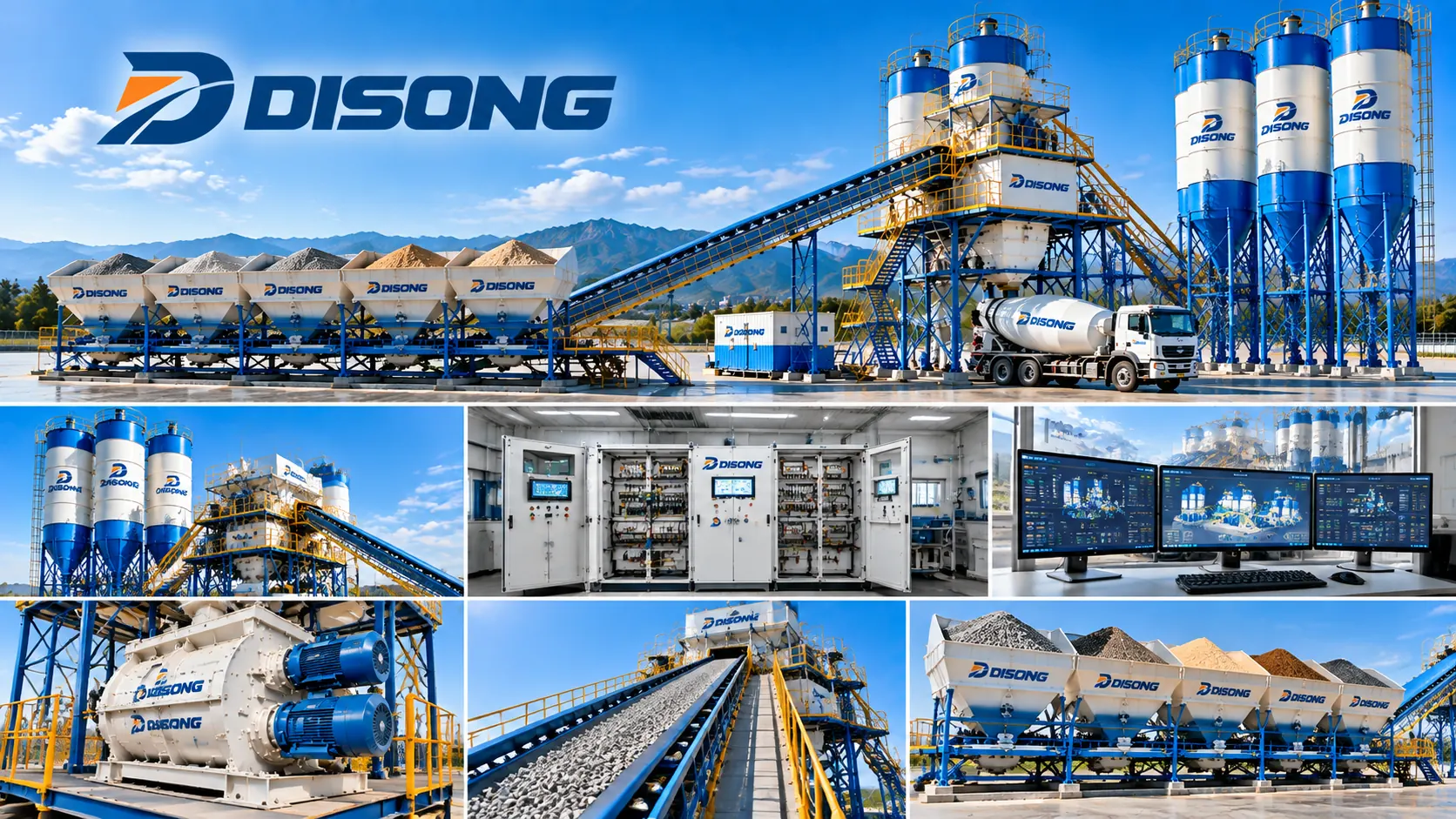
Infrastructure corridors buy concrete as a logistics problem before they buy it as a mix design. The pour is long, the delivery route is fixed and often public, and the plant either sits inside the works or the concrete arrives from somewhere across the city. Which station that points to is decided by the peak and by the site — not by the total volume of the project.
The pour plan sets the capacity
Tunnel lining, diaphragm walls, pile caps, pier and deck pours, and long pavement runs each hold the discharge point busy for hours with trucks queuing behind it. That is a peak-output question, which is why this kind of work usually shortlists the HZS90, HZS120 and HZS180, whose JS1500 to JS3000 mixers keep the discharge point moving. A segment yard, an enabling-works package, or a road job where the plant moves between sections as the works progress is a different calculation, and usually starts at the HZS50 to HZS75 range.
Siting a plant inside a city
Corridor work in a built-up area puts the concrete where there is no room for it. A dedicated station on or beside the works removes a very large number of lorry movements: one 100 m³/h plant replaces a continuous stream of deliveries, each of which would cross the same roads the neighbourhood uses. That is the argument that gets an on-site plant approved — and it is also why the conditions attached to it are about everything the plant emits at street level: dust, noise, and the hours it runs.
Those are engineering choices. Covered or enclosed aggregate bins and a covered conveyor keep the yard from lifting dust in wind; dust collectors at the silo tops and at the batching and transfer points capture what a fabric filter can capture; water misting at transfer points and over the yard knocks down the rest; washdown water is collected and the surplus recycled rather than run to the drain. A low-noise mixer, with the noisiest points enclosed, is what an early start or a night pour rests on. What the equipment can do is reduce what leaves the site line — the permit terms, the monitoring plan and the permitted hours remain the site's own, and the plant is configured around them.
Precast segments at the same site
Segment and element yards frequently run alongside the cast-in-place work, and the same station feeds both. A yard casting on a daily cycle needs batching accuracy and aggregate moisture compensation more than it needs headline capacity, and it needs covered aggregate storage so the mix does not move with the weather from one day to the next.
A station built for one corridor package
On a package long enough to pay for it, the concrete is produced beside the works rather than driven to them. PT Waskita Beton Precast said in a release dated 27 October 2026 that its Magelang station was built specifically to supply ready-mix for the Yogyakarta–Bawen toll section 3 — an 8.2 km section between the Magelang and Borobudur interchanges — and quoted a capacity of up to 88,704 m³ a year; the same release describes fly ash used as a partial substitution for cement. That is the pattern corridor work produces: a station sized to one package and sited close enough that the haul does not decide the pour rate.
What such a station asks of the equipment is not what a commercial ready-mix yard asks. The mix design is narrow and repeats for months, so batching accuracy and aggregate moisture compensation matter more than a wide model range; the cement silos are sized against the delivery interval the site can actually take rather than a monthly total; and the layout has to survive being taken down and re-erected when the section is finished. A skid or containerised arrangement, a conveyor that can be re-founded on a new yard, and a control system that can be re-commissioned on site are what decide whether the next relocation costs a week or a month.
Adding a second line to a plant that is already running
Expansion is rarely a greenfield decision: the yard exists, the power supply exists, the customers are signed, and the question is how to raise output without stopping deliveries. In most layouts the sequence that protects production is to fix the new mixer's position and foundation first, leave the existing batching and discharge path untouched while the second line goes up, and tie both lines into one aggregate feed and one set of cement silos only in the final window — planned against the pour calendar rather than a calendar week. What decides the cost is how much of the existing concrete, steel and electrical work can be reused, which is a question about the drawings far more than about equipment size.
Two limits belong on the table at the start. The first is storage: a second line draws on the same silos, the same aggregate bins and the same yard, so the storage that was enough for one mixer is usually the real constraint on throughput. The second is the site supply — a second mixer adds connected load, and the electrical package for both lines is built to the confirmed voltage, frequency and capacity.
Aggregate supply, storage and moving the plant
Infrastructure work is often a site that changes shape: the yard that served one section becomes the wrong yard two kilometres along. Where the aggregate stockpile sits some distance from the mixer, the material usually arrives on a belt conveyor, as it does from the HZS60 upwards; a skip-hoist station such as the HZS50 needs less yard and no conveyor foundation. Cement storage is settled with the same question — the silos are what carry the pour across the gaps between deliveries, and the table below lists the silo arrangement of every model.
The nine models and published prices
| Model | Capacity (m³/h) | Mixer | Aggregate batcher | Cement silo | Aggregate loading | FOB price from |
|---|---|---|---|---|---|---|
| HZS25 | 25 | JS500 | PLD800 | 1 x 50 t | Skip hoist | US$62,000 |
| HZS35 | 35 | JS750 | PLD1200 | 2 x 50 t | Skip hoist | US$80,000 |
| HZS50 | 50 | JS1000 | PLD1600 | 2 x 80 t | Skip hoist | US$109,000 |
| HZS60 | 60 | JS1000 | PLD1600 | 2 x 80 t | Belt conveyor | US$110,000 |
| HZS75 | 75 | JS1500 | PLD2400 | 2 x 100 t | Belt conveyor | US$122,000 |
| HZS90 | 90 | JS1500 | PLD2400 | 2 x 100 t | Belt conveyor | US$126,000 |
| HZS120 | 120 | JS2000 | PLD3200 | 2 x 100 t | Belt conveyor | US$168,000 |
| HZS180 | 180 | JS3000 | PLD4800 | 3 x 150 t | Belt conveyor | US$238,000 |
| HZS240 | 240 | JS4000 | PLD6400 | 4 x 200 t | Belt conveyor | US$320,000 |
What to confirm before ordering
Four things change the quotation: the site supply (voltage and frequency — the electrical package is built for the confirmed figure), the aggregate yard and storage arrangement including whether the plant has to relocate, the destination port with its unloading crane capacity and inland access, and whether you want commissioning support quoted with the plant rather than arranged after shipment.
Frequently asked questions
Which plant does a metro, tunnel or highway package need?
It follows the peak pour, not the average one. Tunnel lining, diaphragm walls, pier and deck pours and long pavement runs hold the discharge point busy for hours, which puts the shortlist in the HZS90 to HZS180 range; a segment yard, an enabling-works package or a spread-out road job where the plant moves between sections usually starts at the HZS50 or HZS75. The nine models and their published FOB prices are on this page.
Can the plant be set up on the construction site itself?
Yes, and for a corridor inside a city that is often the point. A dedicated station on or beside the works replaces a continuous stream of delivery lorries on the same roads the neighbourhood uses. What that needs from the equipment is a compact enough yard arrangement, aggregate storage that does not depend on wind direction, and a discharge point the mixer trucks can reach and leave without queuing on a public road.
What about dust and noise at an urban site?
Those are the conditions an on-site plant is usually approved with, and they are met by specification rather than by promise: covered or enclosed aggregate bins, a covered conveyor, dust collectors at the silo tops and the batching and transfer points, water misting over the yard and at transfer points, washdown water collected and surplus recycled, and a low-noise mixer with the noisiest points enclosed. The permit terms, the monitoring plan and the permitted hours stay the site's own — send them with the enquiry and the plant is configured around them.
Does one station cover both a precast segment yard and cast-in-place work?
It can. A yard casting elements on a daily cycle is fed from the same station, and what it asks for is batching accuracy and aggregate moisture compensation rather than headline capacity — a mix that moves with the weather from one day to the next is the problem moisture compensation exists to solve. Covered aggregate storage is specified with it for the same reason.
A station built for a single highway package — what does it have to get right?
Three things beyond headline capacity. The mix design repeats for months, so batching accuracy and aggregate moisture compensation carry more weight than the widest possible model range. The silos are sized against the delivery interval the site can really take, not a monthly total — a station that runs dry between cement deliveries loses the pour whatever its rated output. And the layout has to be reversible: a package station is dismantled and re-erected somewhere else when the section finishes, so foundations, conveyor supports and control wiring that can be taken up and reused are part of the specification from the start. Which model fits a given package still follows the peak pour, as described above.
Can a second production line be added while the plant keeps producing?
Usually yes, and the constraint is planning rather than equipment. In most layouts the new mixer's foundation and position are fixed first, the existing batching and discharge path is left untouched while the second line is erected, and the two lines are tied into a shared aggregate feed and shared cement silos in one final window scheduled against the pour calendar. What has to be checked before that window is storage and supply: a second mixer draws on the same silos, bins and yard, and it adds connected load, so the electrical package and the storage arrangement are reviewed together with the drawings. Whether the second line shares the existing control system or runs its own is a site decision we need the existing panel schedule for.
What has to be confirmed before the quotation?
Four things: the site supply (voltage and frequency — the electrical package is built for the confirmed figure), the aggregate yard and storage arrangement including how the plant relocates between sections if it has to, the destination port with its unloading crane capacity and inland access, and whether you want commissioning support quoted with the plant.
Contact
DISONG Equipment LLC — Wyoming Limited Liability Company. Mailing address: 525 Randall Ave Ste 100, PMB 1419, Cheyenne, WY 82001, USA. Telephone/WhatsApp: +1 (213) 879-8221. Telegram: @disong_equipment_bot. Email: sales@disongequipment.com.
See also: price list · for contractors · for ready-mix suppliers · for data-centre projects · for road projects · for railway projects · choosing a plant · how a plant ships.
Terms of sale
Prices are FOB port of loading. Ocean freight, destination port charges, unloading and site-specific electrical work are quoted separately per shipment. Equipment is built to order, so returns are not accepted; delivery includes warranty service and spare-parts support from DISONG Equipment LLC.